The source of truth for beginners · English edition (14 chapters)
The Beginner Chinese Handbook
The foundational handbook for beginning Chinese learners: every claim graded, every figure dated and defined, every source conflict preserved. Compiled 2025–2026 from 1,186 sources with independent QA.
The Vietnamese edition has 2 extra chapters: the Sino-Vietnamese layer and Chinese in Vietnam. Bản tiếng Việt →

How to read this handbook
Claimwhat the evidence supports, with year + definition + scope on every figure
Estimatenumbers with ranges or single sources — uncertainty stated, never hidden
Conflictwhere sources disagree, both sides stay — no picking the comfortable one
Unknownwhere evidence is silent, the book says so instead of filling gaps with guesses
Full detail: Method & Open questions.
 Chapter 1
What Chinese Is
The names for 'Chinese' nest rather than compete — get this frame right and the rest of the book stops conflicting.
Chapter 1
What Chinese Is
The names for 'Chinese' nest rather than compete — get this frame right and the rest of the book stops conflicting.
 Chapter 2
Who Speaks Chinese, and Its Status
Over a billion speakers, one statute, and numbers that always travel with their year and definition — every counting method gives a different answer.
Chapter 2
Who Speaks Chinese, and Its Status
Over a billion speakers, one statute, and numbers that always travel with their year and definition — every counting method gives a different answer.
 Chapter 3
Sounds and Tones
Four tones plus a neutral one, sounds your ear never learned to filter — and why any 'tonal-language advantage' stays a hypothesis, not a promise.
Chapter 3
Sounds and Tones
Four tones plus a neutral one, sounds your ear never learned to filter — and why any 'tonal-language advantage' stays a hypothesis, not a promise.
 Chapter 4
Pinyin
Pinyin is a romanization bridge approved in 1958: cross it on its own terms, never on Latin-alphabet intuition.
Chapter 4
Pinyin
Pinyin is a romanization bridge approved in 1958: cross it on its own terms, never on Latin-alphabet intuition.
 Chapter 5
Characters
Characters assemble from strokes and components; the 2013 standard table holds 8,105 characters in three levels — and 'the total number of Chinese characters' has no single defensible answer.
Chapter 5
Characters
Characters assemble from strokes and components; the 2013 standard table holds 8,105 characters in three levels — and 'the total number of Chinese characters' has no single defensible answer.
 Chapter 6
Grammar: What Beginners Actually Need First
No inflection, SVO order and 是 — what beginners actually need first, plus where the public evidence genuinely runs out.
Chapter 6
Grammar: What Beginners Actually Need First
No inflection, SVO order and 是 — what beginners actually need first, plus where the public evidence genuinely runs out.
 Chapter 7
Vocabulary: How Chinese Words Work
Single-syllable morphemes combining into words; check any '2,000 words = 98% of conversation' claim before buying it.
Chapter 7
Vocabulary: How Chinese Words Work
Single-syllable morphemes combining into words; check any '2,000 words = 98% of conversation' claim before buying it.
 Chapter 8
Typing and Input
IMEs, pinyin typing, and rare characters: when the glyph is missing from your font, your encoding table, or your input method.
Chapter 8
Typing and Input
IMEs, pinyin typing, and rare characters: when the glyph is missing from your font, your encoding table, or your input method.
 Chapter 9
Exams: HSK and Beyond (as of 2026-09-06)
HSK 2.0/3.0, TOCFL, HSKK: a transitioning picture as of 2026-09-06 — re-verify every logistic detail (fees, dates, formats) right before you act.
⏱ 2026-09-06
Chapter 9
Exams: HSK and Beyond (as of 2026-09-06)
HSK 2.0/3.0, TOCFL, HSKK: a transitioning picture as of 2026-09-06 — re-verify every logistic detail (fees, dates, formats) right before you act.
⏱ 2026-09-06
 Chapter 10
How People Actually Learn Chinese
Who the FSI's 2,200 class hours were measured on, how far spacing/retrieval evidence transfers — and the real limits of language-learning science.
Chapter 10
How People Actually Learn Chinese
Who the FSI's 2,200 class hours were measured on, how far spacing/retrieval evidence transfers — and the real limits of language-learning science.
 Chapter 11
The First-Decisions Chapter
Simplified or traditional? What to learn first? A question-driven frame, not a doctrine — with the silent spots in the evidence marked.
Chapter 11
The First-Decisions Chapter
Simplified or traditional? What to learn first? A question-driven frame, not a doctrine — with the silent spots in the evidence marked.
 Chapter 12
A Short History of the Writing System
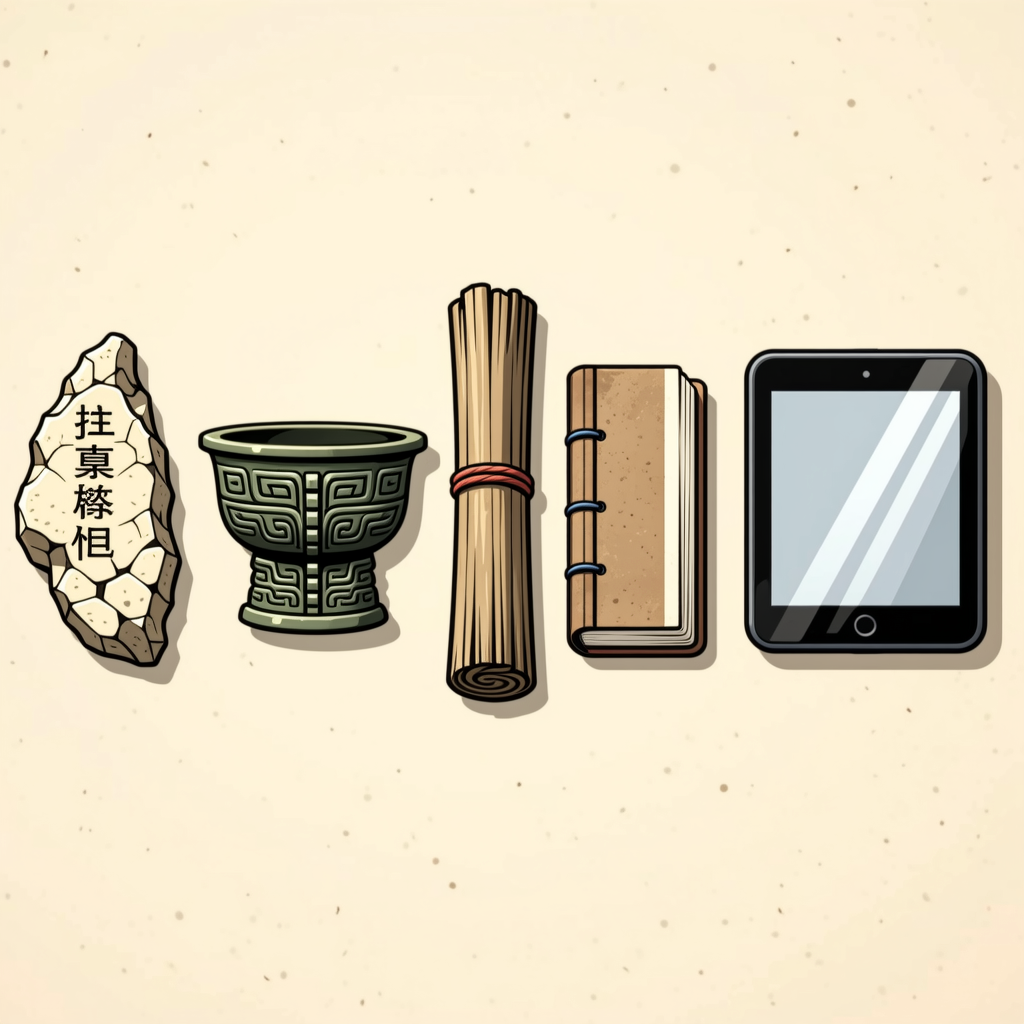
Oracle bones ~3,000 years, the 1956 simplification, and the 53.06% (2000) → 80.72% (2020) → 85%-target (plan, not measurement) series.
Chapter 12
A Short History of the Writing System
Oracle bones ~3,000 years, the 1956 simplification, and the 53.06% (2000) → 80.72% (2020) → 85%-target (plan, not measurement) series.
 Chapter 13
Chinese in East Asia
Japan, Korea, Singapore: Chinese writing living different lives in each place; the language's regional status as of 2026.
Chapter 13
Chinese in East Asia
Japan, Korea, Singapore: Chinese writing living different lives in each place; the language's regional status as of 2026.
 Chapter 14
Chinese in Social and Digital Life
1.125 billion internet users (CNNIC, 12/2025), online language, dialects and attitudes — Chinese in real life.
Chapter 14
Chinese in Social and Digital Life
1.125 billion internet users (CNNIC, 12/2025), online language, dialects and attitudes — Chinese in real life.
🎙 Pronunciation Station
The handbook explains WHY; the Station is where you PRACTICE: 21 initials, 41 finals, 5 tones, the 411-syllable matrix — real audio, recording and comparison.